Six Sigma: Optimization of Solder Paste Printing
Data-driven process optimization in SMT manufacturing using design of experiments, statistical modeling and Six Sigma.
Background & Approach
Objective
The project aimed to improve quality in solder paste printing. The initial first-pass yield (FPY) of 56.1% was to be increased to more than 95%.
Methodology
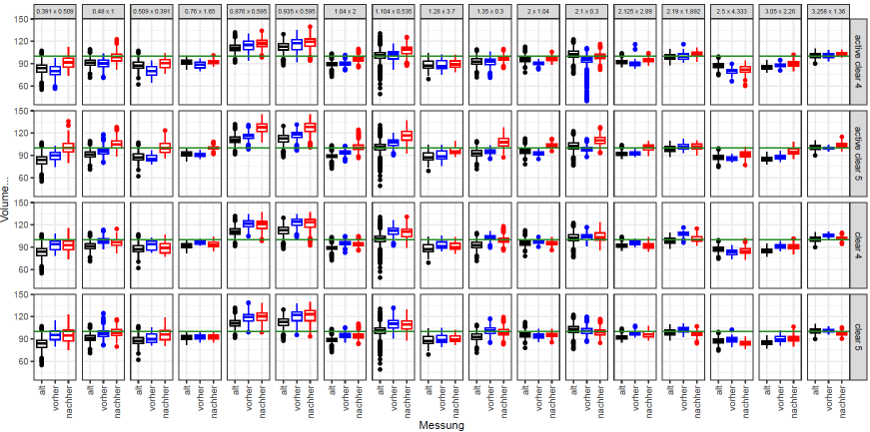
Applied the DMAIC approach, including measurement system analysis, design of experiments and regression modeling. For each of four solder pastes, 54 experimental runs investigated separation speed, separation distance and printing speed. Model-based parameter optimization was followed by experimental validation.
My contribution
Conducted data-based process quality analyses, applied statistical techniques and derived paste-specific printing settings. Standardized procedures for solder paste handling and process monitoring were also developed.
Status & Findings
Adjusted process settings improved first-pass yield for three of the four solder pastes. The highest validation result was 94.9% for Clear 5. The investigation also showed that average paste volume alone is not sufficient to assess print quality. The target of more than 95% FPY was not achieved. This completed practical project formed part of my successful Six Sigma Green Belt certification at the Institute of Production Systems, TU Dortmund University.